Sofia Chaniotaki
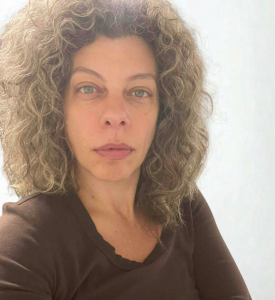
PhD Candidate, La Trobe University
The use of digital media for cultural immersion in the teaching of Modern Greek as a foreign language
Abstract:
This presentation explores how digital media can help create greater cultural immersion in the teaching of Modern Greek as a foreign language. According to recent studies, the use of social networks and digital media favours motivation and exposure to authentic input in language learning (Alasal, 2025; Zhang & Romero-Forteza, 2024; Zhu et al., 2024). Unlike traditional materials, digital resources, such as social networks, videos, memes, and podcasts, show how language is used in everyday life and allow students to engage with contemporary culture.
Drawing on current research in ICT-enhanced language learning and classroom-based practices, this paper demonstrates how digital media can be systematically integrated into language instruction to enhance learners’ cultural competence and communicative skills (Algazzaz, 2023). The presentation introduces a set of practical, classroom-tested activities using short-form video, social media content, memes, and podcasts. These activities are designed to develop learners’ interpretive abilities, awareness of formal and informal registers, and understanding of contemporary Greek culture. Attention is given to the pedagogical affordances of digital media, including authenticity, multimodality, and learner engagement.
This paper also addresses challenges such as content selection, linguistic complexity, and the need for guided mediation. The role of the teacher as a cultural mediator and facilitator of digital learning is highlighted, as the effectiveness of these resources largely depends on adequate pedagogical mediation (Marshall & Bokhorst-Heng, 2025; Pinto-Llorente & Izquierdo-Álvarez, 2024). By combining theoretical insights with practical applications, this presentation aims to provide language educators with adaptable strategies for incorporating digital media into their teaching and fostering deeper cultural immersion. Overall, the value of digital media is highlighted as an effective tool to make learning more dynamic, relevant, and closer to reality, in line with current trends in second language acquisition and educational technology (Alasal, 2025; Li & Li, 2023).
Key words: Modern Greek as a foreign language, digital media, cultural immersion, communicative competence, ICT-enhanced language learning
Bibliography
Alasal, M. S. (2025). The impact of digital media on foreign language acquisition: A comparative study. E-Learning and Digital Media, 0(0). https://doi.org/10.1177/20427530251324830
Algazzaz, W. A. (2023). Communicative-Language Assessment Approach and the Effect of Technology in Designing Speaking Rubrics. English Language Teaching, 16(8), 112-117. https://doi.org/10.5539/elt.v16n8p112
Li, F., & Li, H. (2023). The Routledge handbook of second language acquisition and technology. Frontiers in Psychology 14:1224826. https://doi.org/10.3389/fpsyg.2023.1224826
Marshall, K. L., & Bokhorst-Heng, W. D. (2025). Teachers as mediators in language immersion education. Bloomsbury.
Pinto-Llorente, A. M., & Izquierdo-Álvarez, V. (2024). Digital Learning Ecosystem to Enhance Formative Assessment in Second Language Acquisition in Higher Education. Sustainability, 16(11), 4687. https://doi.org/10.3390/su16114687
Soler Montes, C. & Juan-Lázaro, O. (2025). 10 Digital Language Immersion (DLI) and Virtual Exchanges. In J. Muñoz-Basols, M. Fuertes Gutiérrez & L. Cerezo (Ed.), Technology-Mediated Language Teaching: From Social Justice to Artificial Intelligence (pp. 232-255). Bristol, Blue Ridge Summit: Multilingual Matters. https://doi.org/10.21832/9781800419889-014
Zhang, X., & Romero-Forteza, F. (2024). Social Media as a Tool for Informal Spanish Learning: A Phenomenological Study of Chinese Students’ Behaviour in Spain. Behavioral Sciences, 14(7), 584. https://doi.org/10.3390/bs14070584
Zhu, T., Zhang, Y., & Irwin, D. (2024). Second and Foreign Language Vocabulary Learning through Digital Reading: A Meta-Analysis. Education and Information Technologies, 29, 4531-4563. https://doi.org/10.1007/s10639-023-11969-1
Biography
Sofia Chaniotaki is a PhD candidate in the Department of Languages and Cultures at La Trobe University. She is the recipient of the Vassilogianis PhD Scholarship. She holds a Master of Arts, a Master of TESOL, a Bachelor’s in Hispanic Language and Civilisation Studies, and a Bachelor’s in Greek Philology.
Her doctoral research, supervised by Dr. Stephie Nikoloudis, is entitled “ICT and Digital Media in Modern Greek L2/FL Education: An Empirical Study Towards a Digital Strategic Plan”. The project investigates the role of ICT and digital media in teaching and learning Modern Greek as a second/foreign language in Melbourne. By providing empirical evidence on the use of ICT and digital media in Modern Greek L2/FL education, the study seeks to make a meaningful contribution, offering policy and pedagogical recommendations for teacher training and curriculum design.
Her research interests are related to linguistics, sociolinguistics, heritage language teaching and learning, second/foreign language acquisition, grammar teaching and learning, creative writing activities, content-based and literature-based language teaching, ICT and digital media in foreign language teaching and learning, and teaching Modern Greek and Spanish as a second/foreign language.

